
TWELP now supports wideband speech synthesis across its entire bitrate range, from 300 to 3600 bps, extending the reconstructed speech spectrum from the conventional 0–4 kHz narrowband range to approximately 0–8 kHz, without increasing the transmitted bitrate.
The new capability is implemented in the common TWELP synthesis stage and is therefore independent of the selected operating bitrate. No additional parameters or side information are required in the bitstream.
A TWELP-Specific Approach to Wideband Reconstruction
This is not simply a generic bandwidth-extension stage added after decoding.
The new reconstruction method is derived directly from the TWELP synthesis model. This makes it possible to generate the 4–8 kHz upper speech band in close relation to the already synthesized 0–4 kHz lower-band signal, maintaining pitch and harmonic-phase coherence between the two frequency regions.
Conventional bandwidth-extension techniques can also reconstruct voiced energy and harmonic content in the upper band, but the reconstructed structure is often only indirectly related to the lower-band synthesis. In TWELP, the upper-band reconstruction follows the same underlying speech dynamics as the lower band, allowing the harmonic tracks to continue into the wideband region in a more coherent way.
The result is not merely additional high-frequency energy. The reconstructed upper band preserves meaningful speech structure and follows the spectral and harmonic evolution of the decoded signal.
Spectral Comparison
Figure 1. TWELP synthesis without wideband reconstruction.
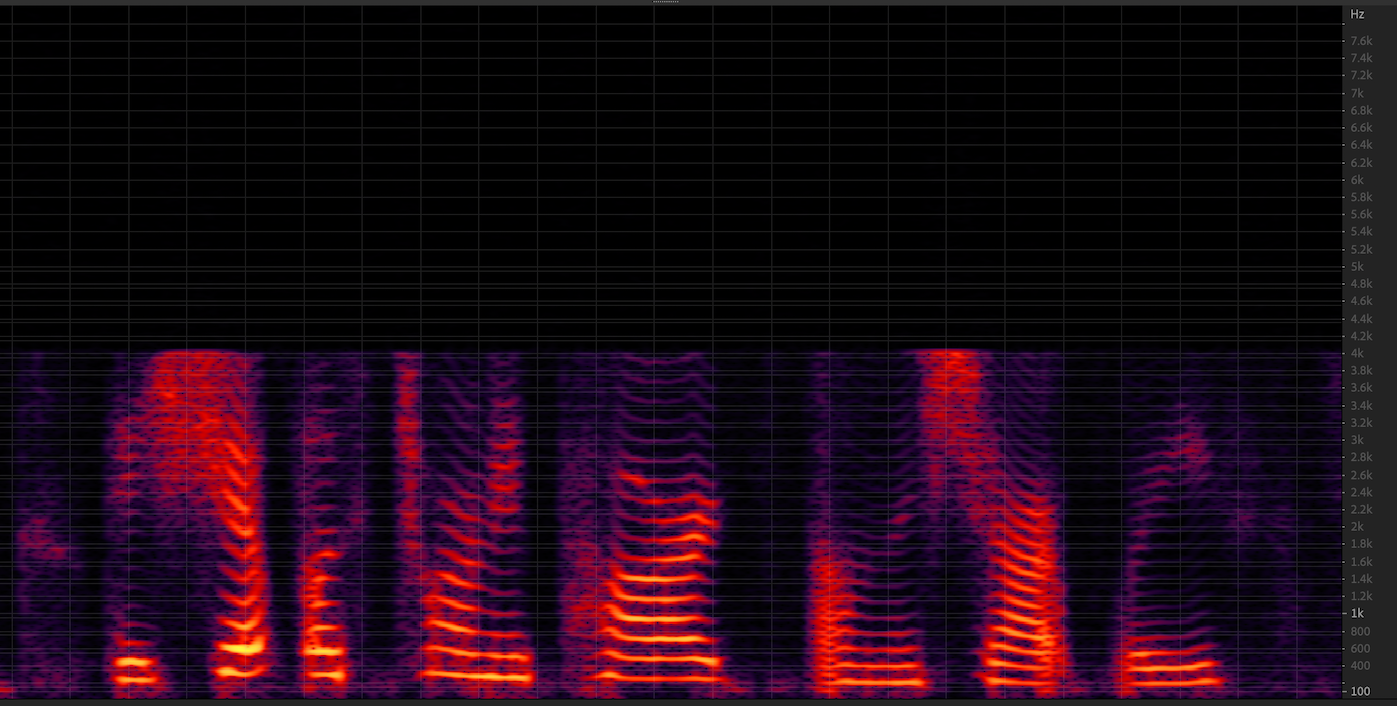
Figure 2. TWELP synthesis with TWELP-specific upper-band reconstruction.
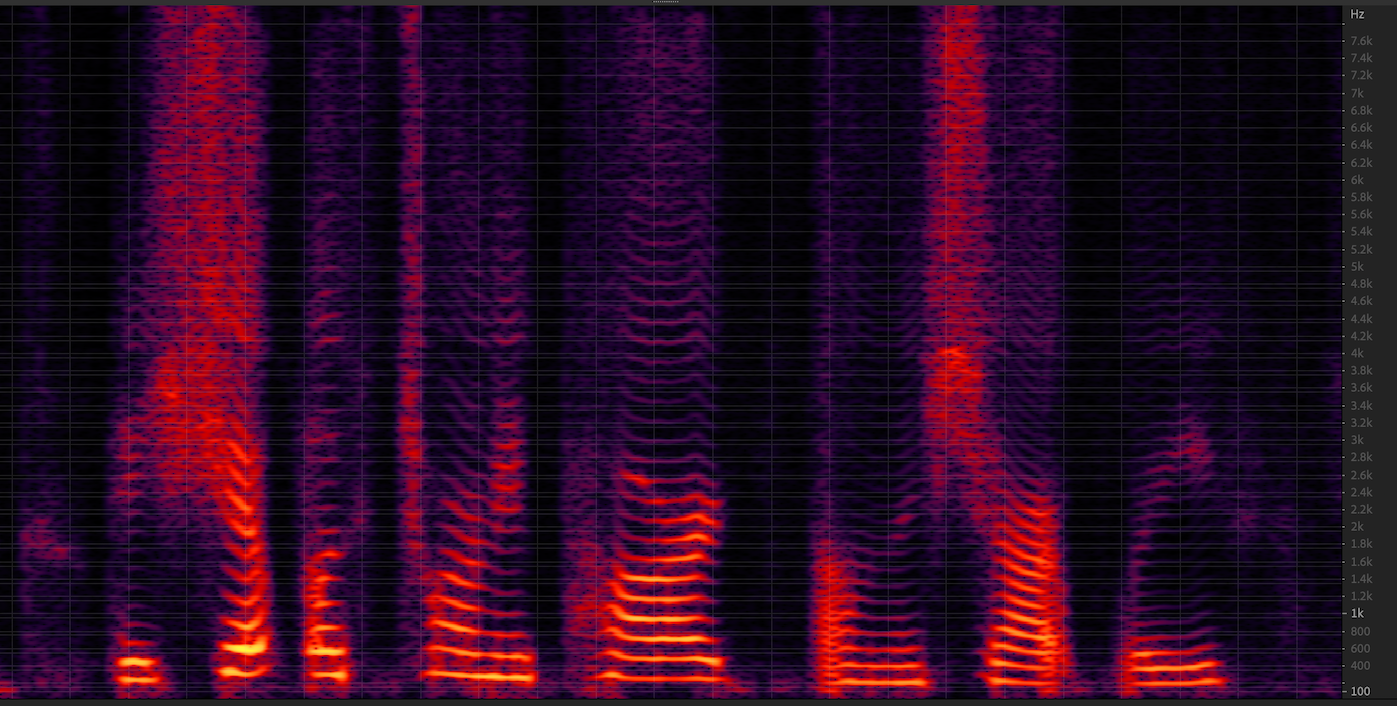
With wideband reconstruction enabled, the synthesized spectrum extends to approximately 8 kHz. The reconstructed 4–8 kHz upper band retains a clearly organized harmonic structure synchronized with the 0–4 kHz lower-band speech.
The difference is particularly visible on voiced segments, where harmonic tracks continue naturally above the narrowband limit instead of appearing as unrelated high-frequency components.
Improved Clarity and Intelligibility
The benefit is not limited to a brighter or more natural sound.
Restoring structurally meaningful upper-band information improves speech clarity, naturalness, and intelligibility. This is especially important at very low bitrates, where the number of perceptual cues available to the listener is already severely limited.
Initial intelligibility measurements confirm a clear improvement with wideband reconstruction enabled. A larger-scale evaluation is planned before quantitative results are published.
Listen to the Difference
The following examples use the same source speech and allow direct comparison between the original wideband recording, standard TWELP decoding, and the new wideband synthesis.
For more accurate comparison, we recommend using good-quality headphones or speakers.
| Source Speech WB, 0–8 kHz | TWELP 1200 bps NB, 0–4 kHz | TWELP 1200 bps WB, 0–8 kHz |
|---|---|---|
The current audio demonstration uses the 1200 bps mode. Since the wideband reconstruction is part of the common TWELP synthesis engine rather than a bitrate-specific coding mode, the same approach applies across the full TWELP range from 300 to 3600 bps.
No Additional Transmission Cost
The transmitted bitrate remains unchanged, making wideband reconstruction available even at the extremely low bitrates for which TWELP was originally designed.
This allows existing TWELP operating modes to produce a wider and more intelligible speech signal without sacrificing bitrate efficiency.
What’s Next
The current wideband reconstruction requires no additional transmitted information and is available across the existing TWELP bitrate range.
We are now developing a scalable TWELP wideband architecture in which the existing narrowband bitstream remains the base layer, while an optional upper-band enhancement layer carries additional information for native wideband synthesis.
If the enhancement layer is unavailable or intentionally discarded, the decoder can automatically fall back to the current zero-bit wideband reconstruction mode instead of reverting directly to narrowband speech.
This approach is intended to provide graceful quality and bandwidth scalability while preserving the ultra-low-bitrate efficiency of TWELP.